What Is A USER STORY IN SOFTWARE DEVELOPMENT
User Stories are a very crucial component in software development as well as product management. They are a short, simple description of a feature or functionality from the user’s perspective. Hence the name “User Story” . The User Story is more commonly used in an agile software development environment to capture & note requirements which will help the software development team to understand the needs & expectations of the end users of the software.
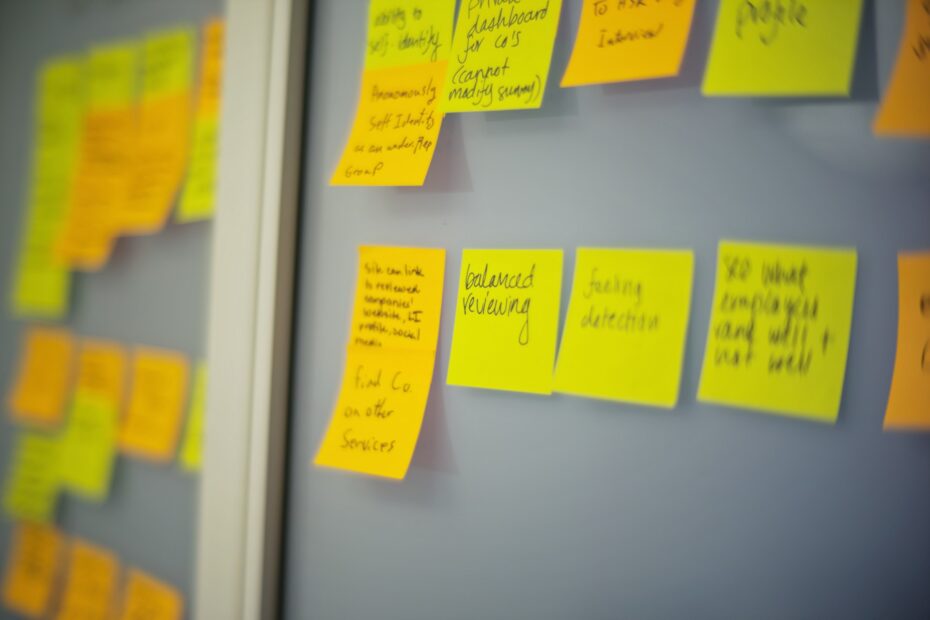
User Stories can be written on Index cards, Post-It Notes or in Project Management Software. Some of the most common and famous Project Management Softwares are Evernote, Notion, Jiira, Monday.com etc
Why Do YOU EVEN NEED A USER STORY ?
In Software development, requirements always change as teams and customers learn more about the system as the project progresses. So because of these dynamic changes, we cannot expect the teams working on the project to work with a static requirements list and then deliver functional software months later.
With the help of a user story , we can reduce the time spent on writing exhaustive documentation by focusing only on customer-centric conversations. Because of this approach, user stories allow the teams to deliver quality software faster, which is what customers prefer.
PATTERNS OF A USER STORY
A user story is an amazingly lightweight method for quickly capturing the “who”, “what” and “why” of a product requirement. User stories are often brief, with each element often containing fewer than 10 or 15 words each. User stories are “to-do” lists that help you determine the steps along the project’s path. They help ensure that your process, as well as the resulting product, will meet your requirements.
Most likely, the pattern of a user story is as follows :
As a [ type of user ], I want [ an action ], so that [ some reason ]
For example : As the project manager of a construction team, I want our team-messaging app to include file sharing and information update so that my team can collaborate and communicate with each other in real-time as a result the construction project development and completion will be fast.
How TO WRITE USER STORIES ?
User Stories are written from a user perspective as mentioned earlier in this article . So, as you can see, the end-user is given more importance during the process . The most important components of a user story are as follows:
- Requirements
- Tasks and their subtasks
- Actual user
- Importance to user words/feedback
- Breaking user stories for larger requirements
Apart from the above mentioned principle, there is also another principle which is given an equal amount of importance during the user story creation purpose which is also known as INVEST principle and is as discussed below.
INVEST – A USER STORY PRINCIPLE
A good user story should be based on INVEST principle which expresses the quality of the user story because at the end of the day, a good software product is completely dependent upon a good user story. It is commonly believed that the INVEST principle was found in the year 2003.
INVEST basically stands for the following:
- Independent: Should be written in a way that allows to be released without depending on one another.
- Negotiable: Only capture the essence of user’s need, leaving room for conversation. User story should not be written like contract.
- Valuable: Delivers value to the end user.
- Estimable: User stories have to able to be estimated so it can be properly prioritized and fit into sprints.
- Small: A user story is a small chunk of work that allows it to be completed in about 3 to 4 days.
- Testable: A user story has to be confirmed via pre-written acceptance criteria
WHAT ARE THE THREE “C” in user stories ?
- Card : Write stories on cards, prioritize, estimate and schedule it accordingly.
- Conversation : Conduct conversations, specify the requirements and bring clarity.
- Confirmation : Meet the acceptance criteria of the software.
SO HOW EXACTLY DO YOU WORK WITH USER STORIES ?
The following points illustrate how we will work with User Stories :
- Once the user story is written then it undergoes review and verification.
- In a project workflow meetings it is reviewed and verified then added to the actual workflow.
- The requirements and functionality are decided based on the stories.
- User stories are scored based on their complexity and the team starts work based on user stories.
There are quite a few benefits for adopting user story approach in agile development such as:
- The seemingly simple format saves time when capturing and prioritizing requirements while remaining versatile enough to be used on large and small features alike.
- It keeps yourself expressing business value by delivering a product that the client really needs
- It avoids introducing detail too early that would prevent design options and inappropriately lock developers into one solution.
- It avoids the appearance of false completeness and clarity
- Get to small enough chunks that invite negotiation and movement in the backlog
- Leave the technical functions to the architect, developers, testers, etc
- Makes it easy to understand the features
- Delivers higher customer satisfaction
- Fastens the development process
- Creates an effective work environment
- Enables collaboration between teams
- Delivery of valuable software
In the preceding paragraph, we saw the advantages of user stories. Now in the next set of paragraphs, let us also consider the few drawbacks of having the user stories. They are as follows :
- User stories may not provide enough detail or clarity to fully capture the requirements.
- User stories may not be sufficient for complex or large-scale projects.
- User stories may be subjective and often are influenced by the biases of the stakeholders.
- User stories may not capture all of the requirements, which can lead to gaps or inconsistencies in the software.
- User stories may not be suitable for projects with a high degree of technical complexity.
- User stories may not capture non-functional requirements, such as performance, scalability, or security, which are critical to the success of the software.
- User stories may not be suitable for teams that lack experience with Agile methodologies or have difficulty working collaboratively.
- User stories may not provide enough detail for remote or distributed teams, as they rely heavily on face-to-face communication and collaboration.
- User stories may not capture the full context or user journey, which can lead to a fragmented understanding of the user’s needs and goals.
The above mentioned paragraph lists the few drawbacks of the user story method . However despite the cons, we can safely say that the overall advantage of using User Stories in Agile Software Development outweigh the disadvantages, as they provide a user-centric approach to requirements gathering, which leads to better customer satisfaction and a more effective development process. However, it is important to use User Stories in conjunction with other techniques such as modeling and prototyping to ensure that all requirements are captured and addressed in the software.
