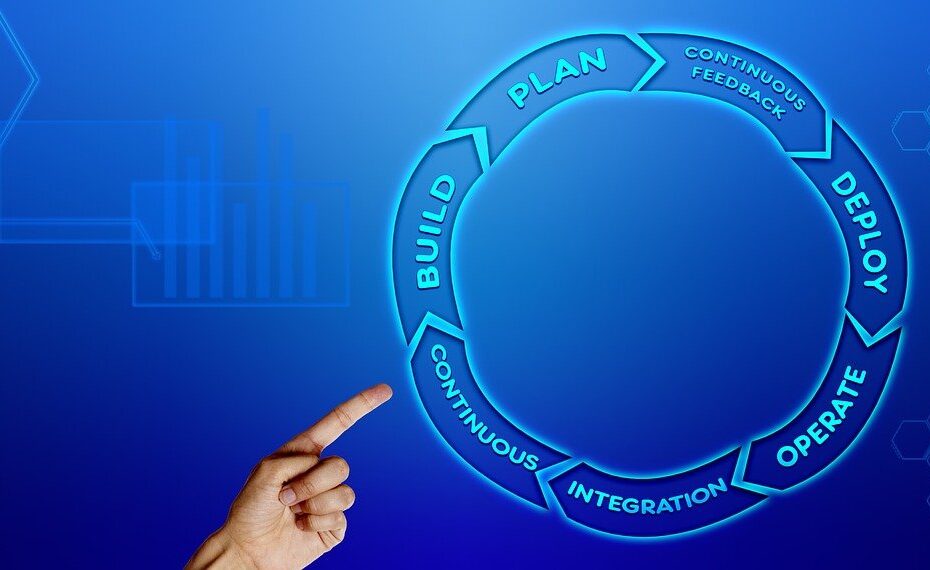
SDLC, or commonly known as Software Development Life Cycle, is a set of steps used to develop software applications. These steps divide the software development process into tasks or processes that can then be assigned, completed, and measured/evaluated.
SO WHAT EXACTLY IS IT ?
In a very simple terms,Software Development Life Cycle is the application of standard business practices to building software applications. It’s divided into six to eight steps: Planning, Requirements, Design, Build, Document, Test, Deploy, Maintain. Some project managers will combine, split, or omit steps, depending on the project’s scope. These are the core components recommended for all software development projects.
SDLC is a way to measure and improve the development process. It allows a proper analysis of each step of the process which will in turn help companies maximize efficiency at each stage and reduce the scope of errors in each stage. As computing power increases, it places a higher demand on software and developers. Companies must reduce costs, deliver software faster, and meet or exceed their customers’ needs. SDLC helps achieve these goals by identifying inefficiencies and higher costs and fixing them to run smoothly.
How the Software Development Life Cycle Works
The Software Development Life Cycle outlines each task required to put together a software application. This helps to reduce waste and increase the efficiency of the software development process. Such kind of monitoring ensures the project always stays on track, and continues to be a profitable investment for the company.
Many companies will subdivide these steps into smaller units which will make them more manageable. Commonly used technical jargons like technology research, marketing research, , cost-benefit analysis etc can also be used to describe the planning phase. Often other steps can also merge with each other. The Testing phase can run simultaneously with the Development phase, since developers need to fix errors that will often occur during testing.
TheRE ARE Seven Phases of the SDLC
1. Planning
This is always the first phase or step in SDLC . In this phase, project managers evaluate the requirements and terms of the project. This can include calculating the labor and material costs, creating a timetable with target goals, and creating the project’s teams and leadership structure.
In this phase, the stakeholders of the project are also included in the discussions and meetings. Stakeholders are anyone who stands to benefit from the software application. The project managers and stakeholders also try to get the feedback from potential customers, developers, subject matter experts, and sales reps in this stage in order to avoid any potential conflicts in future.
The planning phase is very important and crucial and it should clearly define the scope and purpose of the application. It plots the course of the project and directs the team to effectively create the software. It also sets boundaries to help keep the project from expanding or shifting from its original purpose which is commonly known as the dreaded scope creep.
2. SPECIFY AND DEFINE Requirements
In this stage, the list of entire requirement as well as what the software application is supposed to be done is discussed,analysed and specified. For example, a CRM program might require a custom search function as well as a filter section. A Food delivery application might require provisions to handle cash-only payment feature as well.
3. Design and Prototyping
The Design phase implies the way a software application will work. Some aspects of the design will include :
Architecture – Specifies the programming language, industry practices, overall design, and use of any templates or boilerplate
User Interface – Defines the ways customers interact with the software, and how the software responds to user input. Also known as UI and UX.
Platforms – Defines the platforms on which the software will run, such as Apple, Android, Windows version, Linux, etc .
Programming – Not just the programming language, but including methods of solving problems and performing tasks in the application
Security – Defines the measures taken to secure the application, and may include SSL traffic encryption, password protection, and secure storage of user credentials
Prototyping can also be a part of the Design phase. A prototype is like one of the early versions of software in the Iterative software development model.It is commonly known nowadays as MVP or Minimum Viable Product. It demonstrates a basic idea of how the application looks and works. This MVP version can be shown to the stakeholders. We can use the feedback that we get to improve the application. In this way, it is less expensive to change the Prototype phase than to rewrite the entire code to make a change during the Development phase.
4. Software development
This is the phase where the actual code of the software application in development is written . In short, the actual software development process starts in this phase . The number of software developers involved in a project will depend upon the size of the project . A small project can even be written by a single developer or a few developers. On the other hand,a large project will involve a large team consisting of business analyst,software developers,software testers,etc . The software developers will also use an access control or a source code management application like Github to track changes to the code which will ensure compatability between different teams and to make sure that everyone is in the same page and all the targets are achieved by everyone.
In this phase,often errors and glitches will happen . In fact it is extremely crucial that the team involved finds many such crucial bugs,errors and glitches in this stage and then ultimately fix them in this stage itself before the software application is launched.
While writing the code,it is extremely crucial for the organisation and team to ensure that proper coding conventions and practices are followed by the team like clean coding,agile methodologies , etc. The software developers have to ensure that proper comments are written in the software application as well so as to ensure that future software developers who will join the project can understand the project as well as the coding workflow easily. Hence proper documentation is also to be ensured in this stage.Other forms of documentation are FAQ,troubleshooting guides,user guides,etc.
5. Testing
Software testing is another phase that is extremely critical in a software development life cycle . Before a software is made live to its users,it is very critical to test the application intensely to make sure that the application is working as intended . Some examples of testing are automated testing,unit testing , user acceptance testing,performance testing etc . The testing phase helps reduce the number of bugs and glitches that users encounter. This leads to a higher user satisfaction and a better usage rate.
6. Deployment
In this phase,the software application is made live and available to the users . Nowadays,many companies prefer to automate this phase . Deployment can also be complex.Upgrading a company-wide database to a newly-developed application is one example. Because there are several other systems used by the database, integrating the upgrade can take more time and effort.
7. Maintenance
By this point, the entire development cycle is almost finished. The application is done and being used by the users. In this phase, users often discover bugs that weren’t found during the testing phase. These errors need to be resolved, which can spawn new development cycles.
DIFFERENT SDLC Models
Waterfall
The Waterfall SDLC model is the classic method of development. As each phase is completed, the project moves on to the next step. This is a tried-and-tested model, and it works. One advantage of the Waterfall model is each phase can be evaluated for continuity and feasibility before moving on. The main drawback of this method is that the speed of the development is often very slow since one phase must finish before another can begin.
Agile
The AGILE model was designed by developers to put customer needs first. This method focuses strongly on user experience and input. This solves much of the problems of older applications that were cumbersome to use. Plus, it makes the software highly responsive to customer feedback. Agile seeks to release software cycles quickly, to respond to a changing market. This requires a strong team with excellent communication. It can also lead to a project going off-track by relying too heavily on customer feedback.
Iterative
In the Iterative development model, developers create an initial basic version of the software quickly. Then they review and improve on the application in small steps (or iterations). This approach is most often used in very large applications. It can get an application up and functional quickly to meet a business need. However, this process can exceed its scope quickly and risks using unplanned resources.
DevOps
The DevOps security model incorporates operations – the people who use the software – into the development cycle. Like Agile, this seeks to improve the usability and relevance of applications. One significant advantage of this model is the feedback from actual software users on the design and implementation steps. One drawback is that it requires active collaboration and communication. Those additional costs can be offset by automating parts of the development process.
Other models
Many other SDLC models are essentially a variant of these core processes. Organizations use LEAN manufacturing processes for software development. V-shaped development is a type of Waterfall that implements testing, verification, and validation. Spiral development may pick and choose models for each step in the development process.
Best Practices Of Software Development
In addition to the models and stages of software development, there are a few other helpful practices. These can be applied to part or all of the development cycle.
Source Control
Source Control is a security plan to secure your working code. Implement Source Control by keeping the code in a single location, with secure and logged access.
Source Control applications include a change management system to track work done by individuals or teams. As with any storage, use a backup system to record development progress in case of a disaster.
Continuous Integration
Continuous Integration evolved out of a case of what not to do. CI works to make sure each component is compatible through the whole development cycle. Before CI, different teams would build their own projects independently. This created significant challenges at the end when developers stitched the application together. Continuous Integration ensures all teams use similar programming languages and libraries, and helps prevent conflicts and duplicated work.
SDLC Management Systems
A software development cycle management system works to control and manage each step of the development cycle. Management Systems add transparency to each phase and the project as a whole. They also add analytics, bug-tracking, and work management systems. These metrics or KPI’s can be used to improve parts of the cycle that aren’t running efficiently.
Conclusion: The Process for Software Development
SDLC shows you what’s happening, and exactly where your development process can improve and hence it is extremely crucial for every people involved in the software development to know about this.
Like many business processes, SDLC aims to analyze and improve the process of creating software. It creates a scalable view of the project, from day-to-day coding to managing production dates.
